Showing posts with label technology. Show all posts

Thursday, 9 June 2016

Top 10 upcoming smartphone releases

There are some very exciting upcoming smartphone releases that are just gonna rock the technology world with their impressive features, futuristic innovations and awesome quality.Here is our countdown of the top 10!


10.LG G Flex 3

As per now LG has launched LG G5 on 21st Feb with really impressive and advanced specification and now G Flex 3 is not so far from launch. As per rumors LG will soon unveil LG G Flex 3 smartphone in mid 2016.


Key Features

  • 6-inch Full HD display
  • Android v6.0
  • Snapdragon 820 SoC
  • Adreno 530 GPU
  • 4GB RAM
  • 32, 64GB storage
  • 20 MP primary camera
  • 8MP front camera
  • 3500 mAh battery

9. Samsung Galaxy S7 Edge( plus )

Samsung galaxy S7 edge plus will be the next best Smartphone from Samsung, after Launching the S7 and S7 edge, Samsung is thinking to upgrade the Galaxy S7 Device with the upcoming smartphone s7 edge plus. However there is no confirmed Release date of the device, but it seems as it may be announced in upcoming 3 to 4 months. First the device will be made available in USA, Brazil, and other countries, then it will enter India.


The Samsung galaxy S7 edge(plus),  is packed with some high-end specifications, and the device will also come with some enhancement like improved camera and improved the quality of display.Apart from this improvement the specs will be similar to Samsung Galaxy S7edge. Samsung galaxy S7 edge plus will have a coparetivlylower price tag than Samsung galaxy S7.

8. Sony Xperia M Ultra

According to a new rumor out of China, Sony will launch a new smartphone dubbed Xperia M Ultra. Specs-wise, the device is said to be powered by Snapdragon 652 chipset, and sport a 6-inch full HD display.There are some other specs rumors we are getting like, the Sony Xperia M Ultra will sports a 6-inch Full HD IPS-NEO screen display. The device will be powered by Qualcomm Snapdragon 652 SoC, along with 3GB of RAM,The devise will have 32 GB storage.


Key Features


  • 3GB RAM
  • 23-megapixel and 16-megapixel front
  • 6-inch Full HD IPS-NEO Display
  • 32 GB of inbuilt memory
  • Boosted by Snapdragon 652 processor

7. Xiaomi Mi 6

Xiaomi is the brand which is pretty famous for its cheap and high-end smartphones. Xiaomi.Mi6 is supposed to be prepared through a 5.2” (inch) UHD display, which is perfect if love to watch movies on your smart phones.


Key Features

  • Ultra HD 2160 x 3840 pixels Super AMOLED display
  • Qualcomm Snapdragon 830
  • with 6GB of powerful RAM
  • may come with 5g network
  • 4200mah battery
  • 21-Megapixels back and 13-Megapixels front camera

6. HTC and Google’s Nexus Smartphones

After the launch of its flagship smartphone HTC 10 and another variant HTC 10 Lifestyle now they will be looking at the Nexus series smartphones this year, as per the rumors the HTC has been selected by google for the next best nexus upcoming smartphones. The previous smartphones were created by Huawei and Google as Nexus 6P and Nexus 5x, but it looks now the contract is over, and Google has found the best partner for its next device.


HTC as per the rumours they will be making two Nexus devices one is really premium and another is budget Smartphone. The specifications of the smartphones are not leaked anywhere, but we manage to bring some most suitable specs for the high-end nexus smartphone.

Key Features


  • Packed with Qualcomm Snapdragon 830 chip
  • It will be powered with a 4GB of RAM
  • It will have 5.5-inch 2,560 x 1,440 quad-HD AMOLED display
  • 21-megapixel camera on the back 
  • 16, 32, 64, 128GB storage and will have expandability option
  • 44000mAh last longer battery

5. Nokia C1


Finally Nokia officially announced that they are coming back in mobile industry. Nokia has made an agreement with HMD.The wait is finally over for those who love Nokia phones. We may see some best Nokia smartphones at the end of 2016.


Key Features


  • 2GB of RAM
  • 32GB internal storage
  • 4G support
  • 8-megapixel rear camera and 5-megapixel front camera
  • 5-inch display
  • The price will be Less than 20k in India and Approx 300 $


4. Microsoft Surface Phone

It seemed inevitable that Microsoft would create a Surface Phone — not an official name — after it acquired Nokia. In fact, there was talk long before that too, but Microsoft has often denied those rumors and stuck with producing new Lumia phones. However, rumors and leaks regarding such a device have continued, suggesting it’s something the company may still be considering.It is expected to e released in late 2016 or early 2017.


Key Features


  • Quad HD 5.5-inch AMOLED screen
  • Gorilla Glass 4
  • Snapdragon processor 830
  • 8GB of RAM (DDR4)
  • 21-megapixel rear camera and 8MP front camera
  • 64GB or 128GB of internal storage
  • 4000mAh battery

3. OnePlus three (3)

OnePlus 3 will be the successor of OnePlus 2.There are many rumours spreading about the features OnePlus three is likely to have.Anyway, it is clear that this device will be more efficient and powerful than its previous version.That is exciting news because, the previous version OnePlus two was noted for its good camera and fabulous performance. OnePlus 3 will be released on 15th June 2016.


Key Features

  • 4 and 6 GB RAM Variant
  • 5.5-inch AMOLED full HD display
  • Snapdragon 820 processor
  • 16-megapixel back and 8-megapixel front cam
  • Oxygen OS with android M

2. Samsung Galaxy Note 6

It’s not long until the release date of the Samsung’s Galaxy Note 6 is officially announced, and the rumours are rapidly reaching fever pitch. With whispers of Android N, USB Type-C, a whopping 6GB of RAM and a frankly outrageous 256GB of storage, the Note 6 is set to be a beast.


And if that doesn't whet your whippet, then the news of a 5.77in, 2K Super AMOLED display just might.


Key Features


  • 30MP and 16MP isocell camera
  • 6 GB RAM can touch up to 8GB
  • Include 4700mAh battery
  • Storage option from 16GB to 256GB
  • Samsung Exynos 9 Octa processor
  • 5.5-inch 4K display

1. Apple iPhone 7

The iPhone 7 should be more revolution than evolution, and will come with a raft of new features, all packaged in a totally redesigned handset. Apple has kept most of the iPhone 7 details under wraps, but as we approach its release date, we’re slowly uncovering more details about the next iPhone.It is rumored that iPhone 7 will have a built in projector!


Key Features


  • The iPhone 7 will be packed with iOS 10
  • Upgraded Apple A10 chipset processor
  • Have an e-SIM traditional SIM card will no more.
  • Waterproof Technology
  • Reversible USB charger
  • No headphone jack this time
  • Will be available in 4.7-inch and 5.5-inch variant.
  • Slimmest iPhone ever created
  • Iphone 7 will be cost approx Rs. 61454.72 in India and USD $937


Friday, 3 June 2016

Is Technology Stealing Our (Self) Identities?


Who or what is defining your self-identity?

Our self-identities, that is, how we define and see ourselves as unique individuals, play a vital role in who we are and the direction that our lives take. The self-identity encompasses the totality of knowledge and understanding that we gain about ourselves as we develop including our personalities, aptitudes and capabilities, intellectual and physical attributes, interests, and relationships.

We gain our self-identities in two ways. First, as we develop self-awareness, we observe and evaluate our thoughts, feelings, and behavior based on past experience, current needs, and future goals. We also look outward to the world in which we live, for example, social, academic, and physical, for feedback that also shapes our self-identities. Because we are fundamentally social beings and an essential part of our development involves finding our place in the social and cultural context in which we live, feedback from that social world plays a significant role in the evolution of our self-identities.

Because our social worlds have expanded dramatically in the last decade, from families, friends, neighborhoods, and schools to an almost-limitless universe of people due to the proliferation of the Internet and social media, it isn't difficult to see how external forces may now be gaining a disproportionate influence over our self-identities compared to previous generations. And these social influences, accelerated by the recent explosion of technology, is shaping our self-identities in ways in which most of us aren't the least bit aware. 


One of the most powerful ways in which technology is altering self-identity is through the shift from being internally to externally driven. Yes, as I just described, social factors have always had an impact on the formation of self-identity, but they had been, up until recently, partners of sorts with our own internal contributors to self-identity. But now the sheer ubiquity and force of the latest technological advances has taken that influence and turned its volume up to a deafening roar.

In previous generations, most of the social forces that influenced our self-identities were positive; parents, peers, schools, communities, extracurricular activities, even the media sent mostly healthy messages about who we were and how we should perceive ourselves. Yes, there were bad influences, but they were far outweighed by those that were beneficial. These forces acted mostly as a mirror reflecting back on us what we saw in ourselves, resulting in affirmation rather than change in our self-identities.

But now, the pendulum has swung to the other extremes in a social world where the profit motive rules and healthy influences are mostly drowned out by the cacophony of the latest technology. The self-identities of this generation of young people and, in fact, anyone who is deeply immersed in popular culture and media, are now shaped by external forces in two ways.

First, popular culture, through both "old-school" and the latest media, no longer holds a mirror to reflect our self-identities. Nor does it provide feedback about how grounded our self-identities are in the reality of our lives. Instead, popular culture manufactures "portraits" of who it wants us to be. Tapping into our most basic needs to feel good about themselves, accepted, and attractive, popular culture tells us what we should believe about ourselves. The problem is that the self-identity that is shaped by popular culture serves its own best interests rather than what is best for us. Additionally, self-identity is no longer self-identity, meaning derived from the self, but rather is an identity projected onto us by popular culture and in no way an accurate reflection of who we really are.

Second, social media has caused us to shift away from expressing our self-identities and toward constructing facades based on the answers to these questions, "How will others look at me?" and "How can I ensure that others view me positively?" The goal for many now in their use of social media becomes how they can curry acceptance, popularity, status, and, by extension, self-esteem through their profiles and postings. Self-awareness and self-expression give way to impression management and self-promotion. As the writer Christine Rosen observed in her 2007 article in The New Atlantis, "Does this technology, with its constant demands to collect (friends and status), and perform (by marketing ourselves), in some ways undermine our ability to attain what it promises-a surer sense of who we are and where we belong? The Delphic oracle's guidance was know thyself. Today, in the world of online social networks, the oracle's advice might be show thyself." 


We come to see our identities as those we would like to have or that we want people to see rather than who we really are. We then feel compelled to promote and market these identities through social media. The line between person and persona, private and public self become blurred or erased completely and the so-called self-identity becomes a means of our acceptance and status.

Paradoxically, in striving for approval by our social world writ large through technology and in seeking uniqueness that enables us to stand out in the densely populated cyber world, we unwittingly sacrifice our true self-identities and shape our identities to conform to what the digital world views as acceptable identity. And, in doing so, we relinquish the specialness that we hold so dear. Notes Christine Rosen, "Indeed, this is one of the characteristics of MySpace [obviously before Facebook took off]...it is an overwhelmingly dull sea of monotonous uniqueness, of conventional individuality, of distinctive sameness." 


There are two really sad things about this unintended consequence of the use of these emerging technologies. First, most people have no idea of the dramatic changes that are occurring slowly yet inexorably within them (just as a frog doesn't sense it is going to die if placed in water that is heated slowly). Second, this shift in identity, from internally derived to externally driven, can't be good for us as (formerly unique?) individuals nor for us as a (formerly vital?) society.

Thursday, 2 June 2016

Deep Text-Facebook's text understanding AI!


There is just way too much offensive content in many Facebook posts.You are frustrated and want to do something about it.But,reporting these posts can be such a drag!Don't worry!An AI is coming to your rescue!

Facebook has announced the development of a new artificial intelligence(AI) that can analyse what people are writing about in posts with near-human accuracy across 20 languages. It can automatically pick out hate speech from status updates that merely contain controversial terms, it could prevent a human from ever suffering the harassment and having to report it manually.Facebook already says that its AI systems report more offensive photos than humans on its social network.

The applications of 'Deep Text' are big! Facebook knows what your status update is about, it can show it to people who care about that topic. If it understands the difference between “I just got out of the taxi” and “I need a ride” messages, it can ask if you want an Uber. If it detects that you’re trying to sell something in a status update, it can automatically format post with the price and item details. And if Facebook can determine what kinds of comments on celebrities’ posts are interesting and not just “OH MY GOSH I LOVE YOU”, it can surface ones you’ll actually want to read.


Facebook explains that “to get closer to how humans understand text, we need to teach the computer to understand things like slang and word-sense disambiguation. As an example, if someone says, “I like blackberry,” does that mean the fruit or the device?"

Of course, the privacy implications might rattle some people. Facebook is now highlighting that it scans the content of your private messages — something that made Facebook the target of a class-action lawsuit in the past.But I feel that the advantages of 'Deep Text' outweigh the concerns about privacy.

With 'DeepText' and its other image recognition AIs, Facebook could make huge improvements in how it routes content from authors to viewers. That could give it a leg-up over other social networks like Snapchat or Twitter without the know-how or product design to aggressively filter and suggest what people see.

The gap between the AI haves and have-nots is widening. If every News Feed post looks interesting, you’ll spend more time on Facebook, you’ll share more text there, DeepText will get smarter, and the Facebook AI feedback wheel will spin faster and faster towards becoming the perfect content recommendation engine.

Sunday, 29 May 2016

What Happened to Sixth Sense & Pranav Mistry?


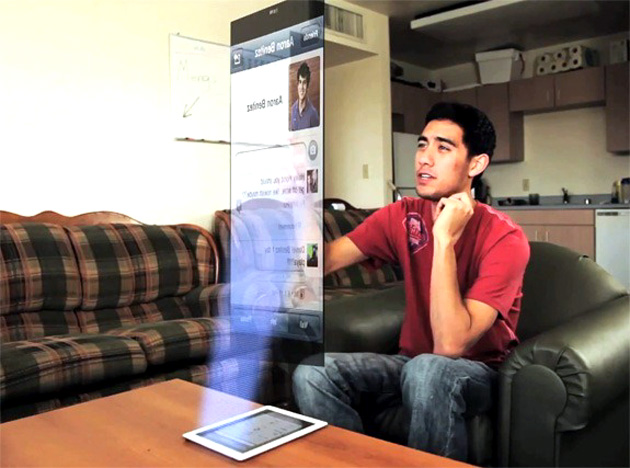
There was a time a few years ago when Pranav Mistry had become everyone’s favourite engineer-scientist. As part of the team that unveiled The Sixth Sense technology, Mistry mesmerized us. The coloured finger caps, the small and sleep projector-cum-camera, and the necessary theatrics of any tech launch led us to believe that the Sixth Sense was the future, and Mistry was the charioteer.

What the video shows is very far fetched and Pranav Mistry or MIT Media Lab never actually gave a demo of the device; they just showed the working using several videos. How many books have ever been published in all of modern history? According to Google’s advanced algorithms, the answer is nearly 130 million books, and they admitted that it’s practically impossible to count every book that has ever been written, so this is just estimate.

But then, you know, we were like, what happened?
 Pranav Mistry told that it was running on Windows 6.5, so if he had to bring it to market he would have to port it to run on a modern OS. That said, projects such as Google Goggles and Microsoft's rumoured competing product are all evolved forms of the concept. Microsoft is one of the investors/sponsors of MIT Media Lab, so they can use research from the media lab, including SixthSense, in their products. So we can assume that Microsoft's upcoming product will use some of the intellectual property created by Pranav Mistry. You can see some of their work on it here - LightSpace - Microsoft Research.
Do remember that SixthSense was a concept and not an actual product. For the concept to become available in the market various factors need to come together including battery technology, miniature versions of the Kinect camera and improvements in wireless data networks.


Meanwhile, Pranav Mistry’s moved on to other things. He’s currently heading the Think Tank Team and is the Director of Research of Samsung, where he’s busy developing the latest in Samsung’s arsenal of cutting edge technologies.                
That’s a pretty good job, I would think.
Couple of months ago, Mistry unveiled the new Samsung Gear ‘smartwatch’, which can call, message, take pictures, play music and run a host of other apps right from your wrist. By the way, Samsung overtook Apple as the world’s largest seller of smartphones last year. I feel pretty certain the tech has something to do with that.